


Eye Health: Complete Guide to Protecting Your Vision and Maintaining Healthy Eyes
- Meds Nest
- Jun 15
- 4 min read

Healthy Human Eye & Vision Care
Eye health refers to the overall well-being of your eyes and visual system. Maintaining healthy vision involves regular eye examinations, proper nutrition, UV protection, managing chronic conditions, reducing digital eye strain, and addressing eye problems early. Good eye care can help preserve vision and support overall quality of life.
Key Takeaways
Topic | Key Information |
Importance of Eye Health | Supports daily activities, independence, and quality of life |
Common Eye Problems | Refractive errors, dry eye, cataracts, glaucoma, AMD |
Prevention | Eye exams, healthy diet, UV protection |
Nutrition | Vitamins A, C, E, zinc, omega-3s, lutein |
Screen Use | Follow the 20-20-20 rule |
Medical Care | Early detection helps prevent vision loss |
Introduction
Eye health plays a crucial role in maintaining independence, productivity, and overall well-being. Many eye conditions develop gradually and may not cause noticeable symptoms in their early stages. Regular eye care, healthy lifestyle habits, and timely medical evaluation can significantly reduce the risk of vision impairment.
What Is Eye Health?
Eye health refers to the proper functioning of the eyes, optic nerves, and visual pathways that allow people to see clearly and comfortably.
Good eye health includes:
Clear vision
Comfortable eye function
Protection from injury and infection
Early disease detection
Long-term preservation of vision
Why Is Eye Health Important?
Healthy vision affects nearly every aspect of life, including reading, driving, work performance, physical activity, and social interactions.
Vision loss can significantly impact independence and emotional well-being, making preventive eye care essential.

Common Eye Conditions
Refractive Errors
Common refractive errors include:
Nearsightedness (Myopia)
Farsightedness (Hyperopia)
Astigmatism
Presbyopia
These conditions are often corrected with glasses, contact lenses, or refractive surgery.
Dry Eye Disease
Symptoms may include:
Burning sensation
Redness
Blurred vision
Eye fatigue
Light sensitivity
Cataracts
Symptoms may include:
Blurry vision
Difficulty seeing at night
Sensitivity to glare
Faded colors
Glaucoma
Glaucoma damages the optic nerve and can cause permanent vision loss if left untreated.
Age-Related Macular Degeneration (AMD)
AMD affects central vision used for reading and recognizing faces.

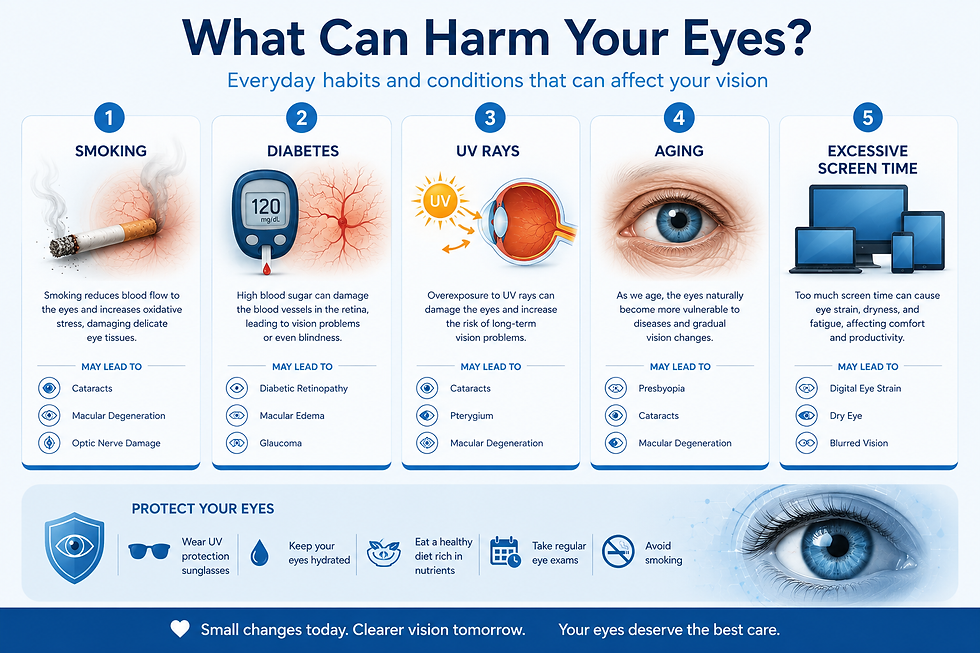
What Causes Poor Eye Health?
Several factors can increase the risk of vision problems:
Aging
Natural aging increases the risk of:
Cataracts
Glaucoma
AMD
Dry eyes
Chronic Diseases
Conditions affecting eye health include:
Diabetes
Hypertension
Autoimmune disorders
Smoking
Smoking increases the risk of:
Cataracts
AMD
Optic nerve damage
Excessive Screen Time
Extended screen use may contribute to:
Eye strain
Dry eyes
Headaches
Blurred vision
UV Exposure
Long-term UV exposure may increase the risk of cataracts and other eye problems.
Signs and Symptoms of Eye Problems
Seek professional evaluation if you experience:
Sudden vision changes
Blurred vision
Double vision
Eye pain

Persistent redness
Flashes of light
New floaters
Loss of peripheral vision
Frequent vision-related headaches
How to Maintain Healthy Eyes
Eat a Vision-Friendly Diet
Important nutrients include:
Vitamin A
Vitamin C
Vitamin E
Zinc
Omega-3 fatty acids
Lutein
Zeaxanthin
Foods that support eye health:
Leafy green vegetables
Carrots
Sweet potatoes
Eggs
Salmon
Tuna
Citrus fruits
Nuts and seeds
Protect Your Eyes from UV Light
Wear sunglasses that block 99%–100% of UVA and UVB rays.
Benefits include:
Reduced UV damage
Lower cataract risk
Protection of eye tissues
Follow the 20-20-20 Rule
Every 20 minutes:
Look at something 20 feet away
For at least 20 seconds
This simple habit can help reduce digital eye strain.
Stay Physically Active
Regular exercise may help reduce the risk of diabetes and hypertension, which can affect vision.
Avoid Smoking
Quitting smoking can lower the risk of several serious eye diseases.
Get Adequate Sleep
Sleep supports:
Tear production
Eye recovery
Reduced fatigue

Who Should Have Regular Eye Exams?
Routine eye examinations are especially important for:
Adults over age 40
People with diabetes
Individuals with high blood pressure
Those with a family history of eye disease
Contact lens wearers
Anyone experiencing vision changes
Safety Information
Seek immediate medical attention if you experience:
Sudden vision loss
Severe eye pain
Eye injury
Chemical exposure
New flashes and floaters with vision loss
Frequently Asked Questions
1. What is the best way to maintain eye health?
A balanced diet, regular eye exams, UV protection, physical activity, and managing chronic diseases are among the most effective ways to support long-term eye health.
2. Which foods are good for eye health?
Leafy greens, carrots, sweet potatoes, fish, eggs, citrus fruits, and nuts contain nutrients that support healthy vision.
3. Can screen time damage eyesight?
Screen use does not usually cause permanent vision damage, but it can contribute to digital eye strain and discomfort.
4. How often should adults have an eye exam?
The frequency depends on age, risk factors, and existing eye conditions. Consult an eye care professional for personalized recommendations.
5. What are early signs of glaucoma?
Early glaucoma often causes no symptoms, making regular eye examinations essential.
6. Can diabetes affect eye health?
Yes. Diabetes can damage blood vessels in the retina and increase the risk of vision loss.
Final Thoughts
Eye health is a vital component of overall wellness. While some vision changes occur naturally with age, many eye diseases can be prevented, detected early, or effectively managed. Regular eye examinations, healthy lifestyle habits, proper nutrition, and protection from environmental risks remain among the most effective strategies for preserving vision and maintaining long-term eye health.
Medical Disclaimer
This content is for educational purposes only and should not be considered medical advice, diagnosis, or treatment. Always consult a qualified healthcare professional regarding any medical concerns, symptoms, or treatment decisions.


Comments