


5 Common Myths About Prescription Medications

Prescription medications are carefully evaluated for safety, quality, and effectiveness, but misinformation can lead to unsafe decisions. Common myths include believing natural products are always safer, assuming prescribed medicines are addictive, or thinking you can stop treatment once you feel better. Understanding what is fact and what is fiction can help you use medicines safely.
Key Takeaways
Myth | What the Evidence Says |
Prescription medicines are always dangerous | They can cause side effects, but approved medicines are evaluated for safety and effectiveness. |
Natural medicines are always safer | Natural does not automatically mean safe or free from drug interactions. |
You can stop medicine when you feel better | Some medicines must be continued or tapered under medical guidance. |
More medicine means faster recovery | Taking more than prescribed can increase the risk of adverse effects. |
If a medicine worked for someone else, it will work for me | Treatment depends on the person's condition, health history, and other medicines. |
Introduction
Prescription medications play an important role in treating infections, chronic diseases, pain, mental health conditions, and many other medical problems. However, myths about medications can spread quickly through social media, word of mouth, and unreliable online sources.
Medication safety starts with understanding that every medicine has potential benefits and risks. The right medication, dose, and duration depend on the individual patient and the condition being treated.
Myth 1:
Prescription Medications Are Always Dangerous
The Fact
Prescription medicines can cause side effects, but that does not mean they are inherently dangerous.
Before a medicine is approved, regulatory authorities evaluate evidence about its quality, safety, and effectiveness. Healthcare professionals then consider whether the expected benefits outweigh potential risks for an individual patient.
Risk can vary based on:
Dose
Age
Kidney or liver function
Other medical conditions
Other medications
Allergies
How the medicine is taken
Taking a medicine exactly as prescribed can reduce avoidable risks.
Myth 2:
Natural Medicines Are Always Safer
The Fact
"Natural" does not automatically mean safe.
Herbal products and dietary supplements can have biological effects and may interact with prescription medicines. Some products can also vary in strength, quality, or ingredients.
Tell your healthcare professional about all supplements and over-the-counter products you use. This information can help identify potentially harmful interactions.
Myth 3:
You Can Stop Taking a Prescription Once You Feel Better
The Fact
Feeling better does not always mean the underlying condition has been fully treated.
Some medicines can be stopped safely when a prescribed course is complete, while others may need to be taken continuously or gradually reduced.
Stopping certain medicines suddenly can cause withdrawal symptoms, rebound effects, or worsening of the underlying condition.
Always ask your healthcare professional before changing or stopping a prescription medication.
Myth 4:
Taking More Medicine Makes It Work Faster
The Fact
Taking more than the prescribed amount does not necessarily produce faster or better results.
Instead, an excessive dose may increase the risk of:
Side effects
Toxicity
Drug interactions
Overdose
Organ damage
Never increase your dose because you think the medication is not working quickly enough. Contact your healthcare professional if symptoms are not improving.
Myth 5:
If a Medicine Worked for Someone Else, It Will Work for Me
The Fact
A medication that helps one person may not be appropriate for another.
Healthcare professionals consider factors such as diagnosis, medical history, allergies, age, kidney and liver function, pregnancy status, and other medications before recommending treatment.
Sharing prescription medications with friends or family is unsafe, even when symptoms appear similar.
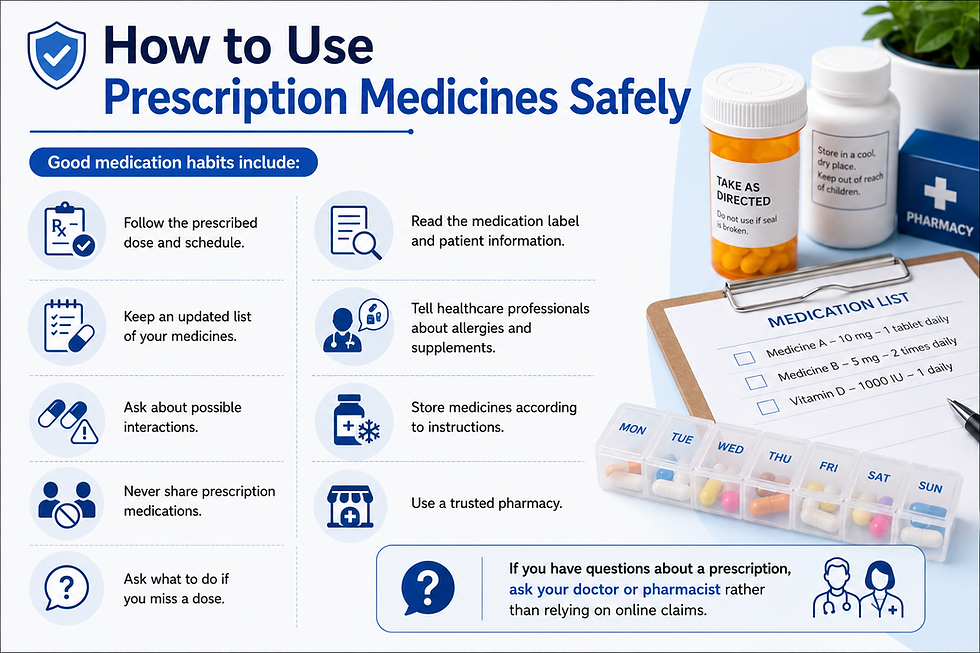
How to Use Prescription Medicines Safely
Good medication habits include:
Follow the prescribed dose and schedule.
Read the medication label and patient information.
Keep an updated list of your medicines.
Tell healthcare professionals about allergies and supplements.
Ask about possible interactions.
Store medicines according to instructions.
Never share prescription medications.
Use a trusted pharmacy.
Ask what to do if you miss a dose.
If you have questions about a prescription, ask your doctor or pharmacist rather than relying on online claims.
When Should You Seek Medical Help?
Some medication reactions require urgent attention.
Seek emergency medical care for symptoms such as:
Difficulty breathing
Severe swelling of the face or throat
Loss of consciousness
Severe confusion
Seizures
Suspected overdose
For less urgent concerns, contact your healthcare professional or pharmacist for advice.
Final Thoughts
Prescription medications can provide important health benefits when used appropriately, but misinformation can create unnecessary fear or encourage unsafe behavior.
The safest approach is to understand why a medication has been prescribed, follow the recommended instructions, and discuss concerns with a qualified healthcare professional. Never change your treatment based solely on a medication myth or someone else's experience.
Frequently Asked Questions
1. Are prescription medications safe?
Short Answer:
Approved prescription medicines are evaluated for safety, but no medicine is completely risk-free.
Detailed Answer:
Every medication can have potential side effects or interactions. Healthcare professionals consider these risks alongside expected benefits when choosing treatment. Following dosing instructions and reporting concerning reactions can help support safer medication use.
2. Are natural medicines safer than prescription drugs?
Short Answer:
Not necessarily.
Detailed Answer:
Natural products can cause side effects and interact with prescription medicines. Some supplements may also have variable quality or strength. Tell your healthcare professional about supplements you take so potential interactions can be considered.
3. Can I stop taking my medication if I feel better?
Short Answer:
Not without checking first.
Detailed Answer:
Some medications are intended for a specific course, while others are taken long term. Certain medicines may cause withdrawal or rebound symptoms if stopped suddenly. Ask your prescriber before changing your treatment.
4. Can I take two doses if I forget one?
Short Answer:
Usually, you should not automatically double the dose.
Detailed Answer:
Instructions for missed doses vary between medications. Check the medication information or contact your pharmacist or healthcare professional for specific guidance rather than taking an extra dose without advice.
5. Can I share my prescription medication?
Short Answer:
No.
Detailed Answer:
Prescription medications are selected for individual patients based on their diagnosis, health history, and other factors. Sharing medication can cause allergic reactions, interactions, incorrect dosing, or delayed treatment of the actual condition.
6. Does a higher dose work better?
Short Answer:
Not necessarily.
Detailed Answer:
Medication doses are designed to balance effectiveness with safety. Taking more than prescribed may increase toxicity without improving treatment. Never change your dose without medical guidance.
7. Should I tell my doctor about vitamins and supplements?
Short Answer:
Yes.
Detailed Answer:
Some supplements can interact with prescription or over-the-counter medicines. Providing a complete list of everything you take helps healthcare professionals identify potential interactions and make safer treatment decisions.
8. Who should I ask if I have questions about a prescription?
Short Answer:
Your prescriber or pharmacist.
Detailed Answer:
Doctors, pharmacists, and other qualified healthcare professionals can explain how to take a medication, possible side effects, interactions, and what to do if you miss a dose. They can also help you distinguish reliable medical information from misinformation.
Medical Disclaimer
This content is for educational purposes only. It does not replace professional medical advice, diagnosis, or treatment. Always consult a qualified healthcare professional or pharmacist before starting, stopping, or changing a prescription medication.


Comments